Rolled Steel Defect Detection
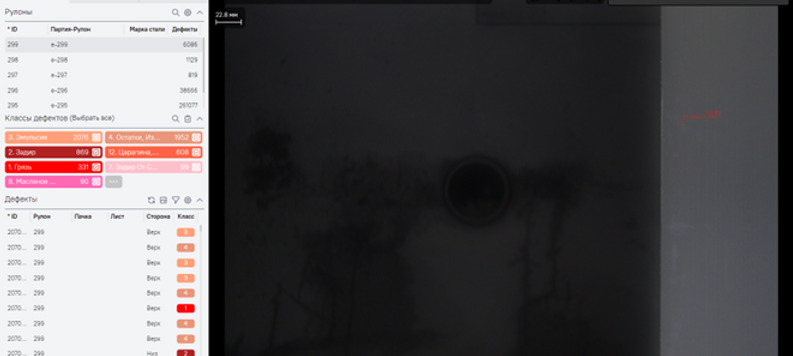
The Rolled Steel Defect Detection system is an enterprise-grade AI solution engineered to replace error-prone manual quality control in industrial metal processing. This platform provides 100% automated surface inspection for cold-rolled, hot-rolled, galvanized, and polymer-coated metal. By deploying sophisticated computer vision (CV) and machine learning (ML) algorithms, the system identifies, categorizes, and maps imperfections in real-time without "blind spots" or reliance on human fatigue.
Precision Engineering for High-Speed Production
Our system is designed for seamless integration into modern manufacturing lines (ASU TPP), ensuring continuous operation without hindering throughput.
Key Operational Advantages
Performance: Capable of maintaining peak accuracy on production lines running at speeds of 30 m/s and above.
Technical Architecture
Technology

Tech Platform

Technology Readiness Levels

Software Requirements Specifications Overview
The system operates on an end-to-end industrial computer vision pipeline connecting line-scan cameras, edge computing nodes, backend databases, and operator workstations.
Metric |
Digital Transformation Domain

Project Type

Service Model

Business and Economic Impact
Industry


Project Status
Successfully Deployed in Industry
Economic Impact
Economic Value & Scrap Rate Reduction
Implementation of the Rolled Steel Defect Detection platform shifts quality control from a post-production logistical burden into a core driver of bottom-line profitability.
Social & Environmental Impact
The deployment of computer vision technology across high-speed rolling mills directly advances environmental sustainability and occupational health standards.
Digital Transformation Domain
Unit Cost
$5,000,000
Pricing Model
Licensing: Out-licensing model available for industrial enterprise integration.
Commercial Structure: Structured milestone-based payments correlated with deployment and scaling phases.
Product Nature: Standalone AI Software Product / DSaaS (Data Science as a Service).
MARKET CAPABILITY & CONSUMER GROUPS
TARGET MARKET SEGMENTS
KEY CLIENT & CUSTOMERS
PROJECTED SALES METRICS
Operational: Plant Managers, Chief Engineers, Quality Control Department leads.
Technical: IT Departments responsible for ASUTP/MES integration, Data Science units.
Commercial: Sales and supply chain teams managing client compliance documentation.
Key Industrial Partner: PJSC Severstal.
Market Scope: Large-scale metallurgy and metal processing holdings globally.
Given the robust CAGR of the global industrial IoT (IIoT) market, projected at approximately 22.8% through 2028, and the rising demand for intelligent factory automation in metallurgy, this solution is positioned for rapid scalable adoption. Specific market penetration forecasts are available for stakeholders during individual consultations based on plant throughput and existing line capacity.
INVESTMENT RETURN & SUSTAINABILITY
PRODUCT SUPPORT COSTS
Maintenance is streamlined through the platform's ability to perform autonomous model retraining on new data segments. This active learning approach allows for fine-tuning models on new defect types or varied steel grades without constant external development costs, ensuring the system evolves alongside the production line.
INVESTMENT RETURN
Financial & Operational Value Framework
Operational Yield Optimization: Direct increase in saleable tonnage by capturing surface flaws (starting from 0.5 mm² at line speeds of 30 m/s and above) at the exact production source rather than post-delivery.
Logistics & Re-processing Cost Elimination: Substantial financial savings by avoiding the expensive transportation, handling, and energy-intensive re-melting expenses associated with client-rejected steel coils.
Marketing Communications
Marketing Materials and Resources
License Tiers


Commercial Channels & Digital Marketplaces
Project Media Gallery & Video Demonstrations


Careers Anchor
Executive Roles


Project Biography
The Genesis of High-Speed Industrial Vision
The Rolled Steel Defect Detection platform was conceived to solve one of the most persistent economic bottlenecks in modern metallurgy: the inability of human operators and legacy equipment to ensure 100% surface quality assurance across high-speed rolling lines without blind spots.
My Companies


Career Trek
Career Recognition